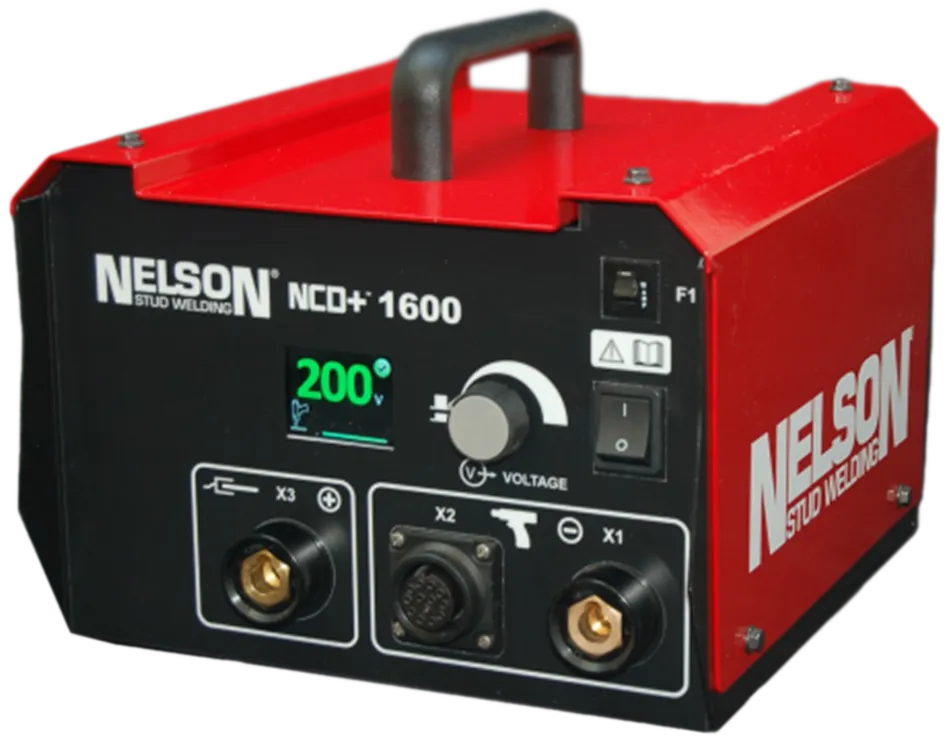
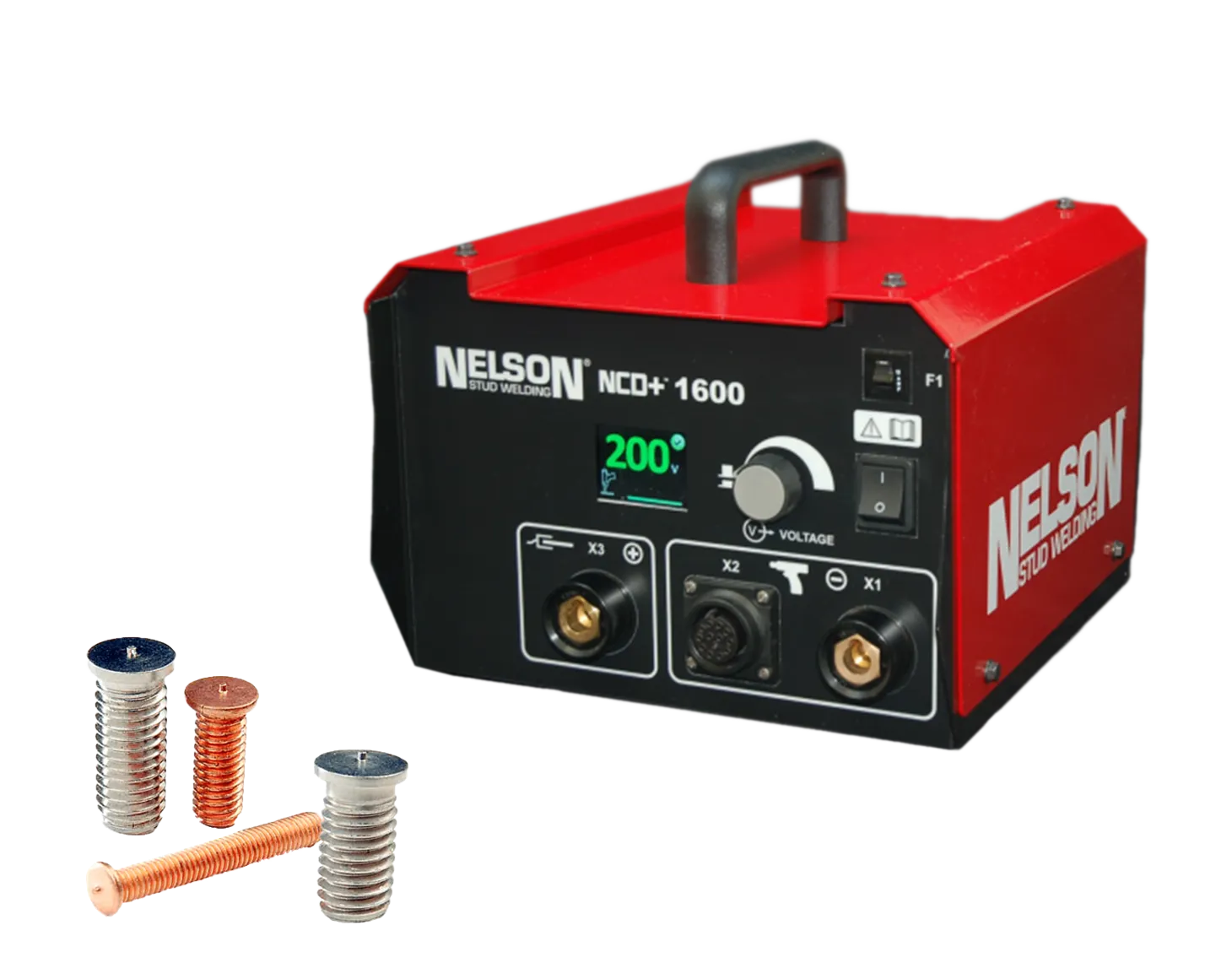
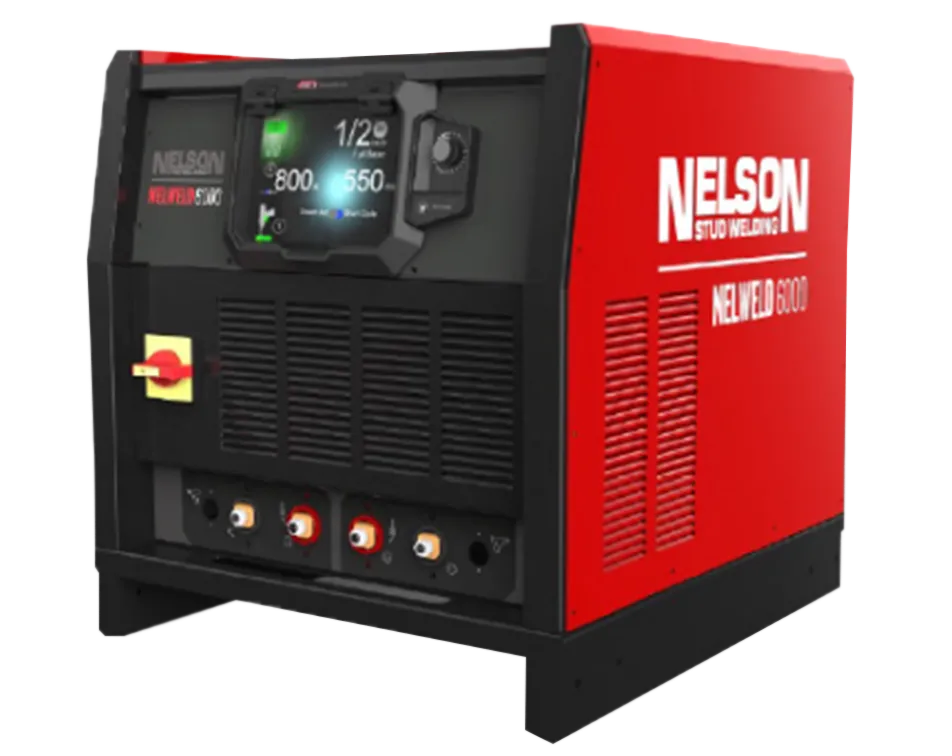
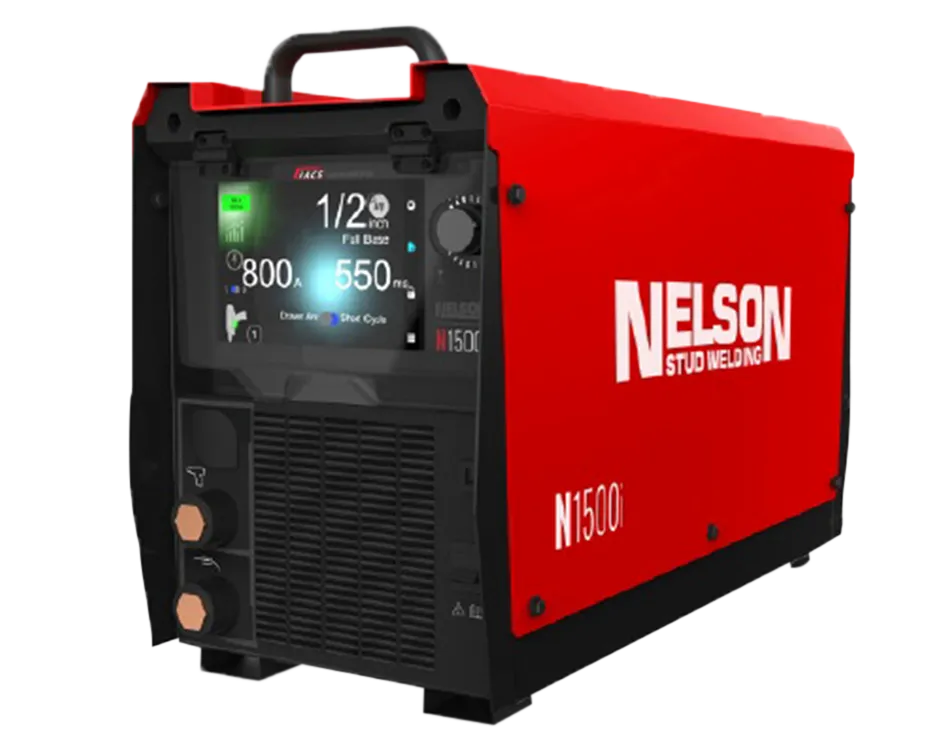
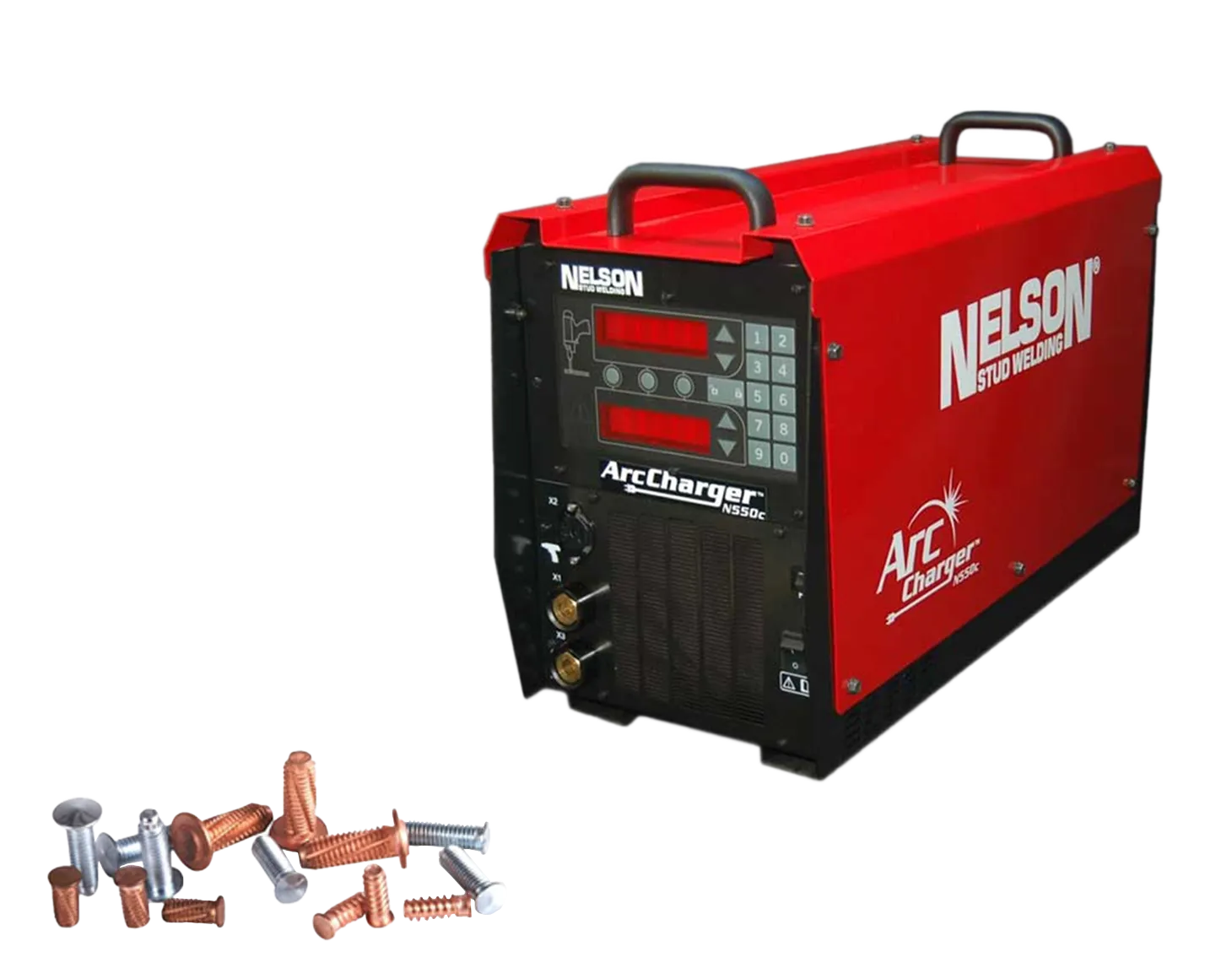
Nelson® offers a complete line of stud welding systems to meet even the most demanding stud welding performance requirements. We can design custom systems for a wide range of end-use applications.
Today, the Stud Welding process is considered one of the best and safest methods for fastening studs, due to its practicality, speed and high mechanical strength. In many areas, stud welding is the most cost-effective fastening method for components. When using thin sheets, stud welding is often the only technical solution. In addition to ease and speed in welding, we deliver gains in quality, performance and safety, with internationally certified equipment and products.
Stud welding offers many benefits because it is a high-speed process that takes milliseconds. Simply put, during the stud welding process, a fastener is bonded to a metal workpiece. The stud is positioned on a base metal, while a welding arc melts the stud and part of the base metal. The stud is then plunged into the molten metal until it solidifies again.
It is frequently used in industrial applications, electrical panels, elevators, agricultural implements, shipbuilding, construction and infrastructure.
Cost Reduction and Return on Investment
•Significant reduction in operating costs, as skilled labor is not required.
•Stud welding involves lower maintenance costs.
•No electrodes are required.
Process Time:
Not every type of welding joins two items easily or in a short period of time. Fortunately, stud welding quickly attaches the fastener to the base material. Attaching a stud to a thin steel sheet does not require much effort and can be done at high speed (in milliseconds).
Strength and Robustness:
The weld strength is much higher than that of the original material or even the weld stud. This means that the welds made during the stud welding process will last longer than the entire product, which benefits the product because it will not show defects at the joint locations.
Weld Quality (No Weld Spatter)
•Some types of welding are known for spatter. For example, welders commonly experience spatter in MIG welding, sometimes excessively. With stud welding, there is no weld spatter because a ceramic ferrule shields the arc and weld zone.
Diversified Solutions:
•When learning how to weld studs, you will see how versatile the stud welding process can be. It can be used to fasten overhead lines, machine guards, handles, fireproofing material, insulation, wiring looms and much more. This type of welding is beneficial in situations where the back side of an assembly is not accessible. For stud welding, access is only fully required from one side. This includes instruments, grounding points, rails and printed circuit board mounting plates.
Processes
•During stud welding, it is not a problem if an item is painted or pre-coated.
a.Eliminates the need for drilling and tapping.
b.Full-penetration weld.
c.Welding in all positions.
d.Wide selection of materials: mild steel, stainless steel, aluminum, brass.
e.Welding on thin sheets (> 0.6 mm)